Baseballer Gear
The Ultimate Guide to Choosing the Right Baseball Bat for Youth Players
How to choose the best baseball bat for youth players based on playing style, skill level, and budget. Differences between composite and alloy bats, bat types for contact hitters versus power hitters, and highlights important factors such as control, swing speed, power, and comfort.
5/25/20265 min read


Top Baseball Bats for Youth Players
Choosing the right baseball bat for a youth player is crucial for performance and enjoyment of the game. Several models stand out as particularly beneficial for young athletes in this age group. Below are some of the top options available, each suited for different playing styles and preferences.
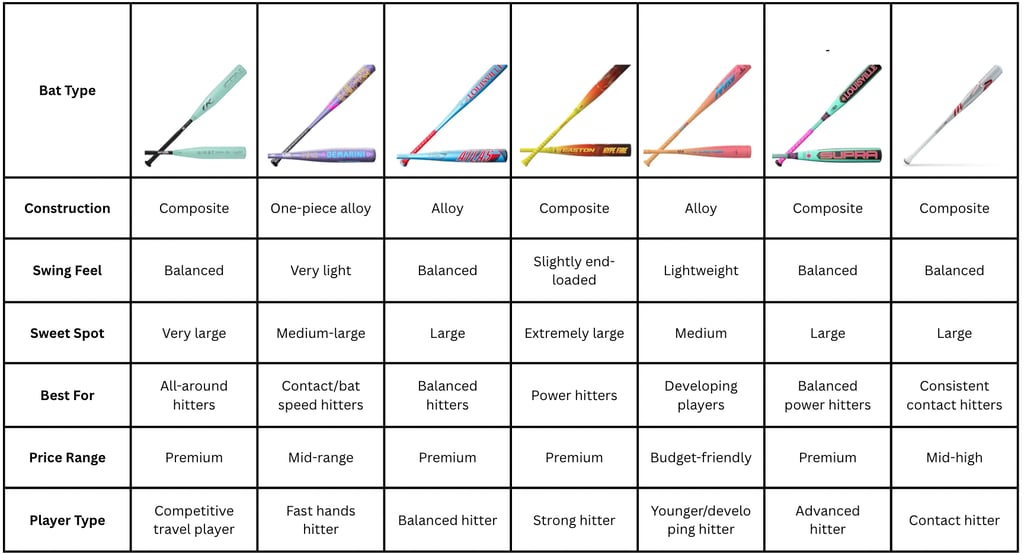
The Rawlings Icon is highly regarded as one of the best overall bats for younger players. This bat features a balanced design, which allows for easy handling and control. Its one-piece construction promotes a more solid feel upon contact, making it a favorite among players. With its ideal weight distribution, the Rawlings Icon is perfect for budding young sluggers aiming for consistent hitting.
For those players who prioritize bat speed, the DeMarini Voodoo is an excellent choice. This bat is engineered for enhanced whip, resulting in greater swing speed. The Voodoo’s advanced technology provides a larger sweet spot, making it easier to connect with the ball. As players develop their skills, this bat facilitates quicker reactions at the plate, making it ideal for aggressive hitters.
Another noteworthy option is the Easton Hype Fire, renowned for producing maximum pop. The unique construction of this bat allows for impressive contact and ball flight, making it suitable for power hitters. With a lightweight feel, the Hype Fire supports fast swing acceleration while delivering substantial power on contact. This feature can significantly benefit young players aiming to excel in travel baseball, where hitting prowess is essential.
In summary, these bats cater to a range of preferences and styles, ensuring that young players can find a suitable option to enhance their game. Whether prioritizing control, speed, or power, the Rawlings Icon, DeMarini Voodoo, and Easton Hype Fire represent some of the finest choices on the market for young athletes.
Quick Picks
Choosing the Right Bat Based on Player Type
Understanding the player's hitting style and strengths is crucial when selecting the appropriate baseball bat. Generally, players can be categorized as either contact hitters or power hitters, each type having distinct preferences that guide their bat choices. Contact hitters, known for their ability to make consistent contact with the ball, often prefer balanced alloy bats. These bats provide a more balanced swing weight, facilitating quicker bat speed and enhanced maneuverability, which are essential for making precise contact with the ball.
On the other hand, power hitters tend to lean towards composite bats due to their potential for greater barrel performance. Composite models are designed to enhance both the sweet spot and the overall power of the swing, providing a trampoline-like effect that can deliver impressive distances on well-struck balls. It is noteworthy that as players develop strength and confidence in their swings, they may transition from balanced alloy bats to more powerful composite options to further elevate their performance on the field.
Additionally, personal comfort and swing feel play a critical role in bat selection. Players should hold the bat, feeling its weight and balance to determine how it aligns with their swinging style. A comfortable grip and a responsive feel during practice swings can greatly influence a player's confidence at the plate. It’s beneficial for parents and coaches to involve the player in this decision-making process, encouraging them to test various bats to find one that complements their individual play style.
Ultimately, the right bat aligns with the player’s unique preferences, whether they lean toward contact or power. By taking into account these aspects, one can ensure that the chosen bat will enhance the player's overall batting experience.
Budget Considerations: Finding the Perfect Bat
Choosing the right baseball bat for a young player requires careful consideration of both performance and budget. Young athletes grow rapidly, and investing in a suitable bat can enhance their skills while also making the game more enjoyable. It is crucial to strike a balance between affordability and quality without compromising performance.
Budget-friendly options are available, such as the Easton Mav1, which offers a solid performance and durability at a reasonable price. This bat is often favored among younger players due to its lightweight design, which aids in swing speed and control. Conversely, premium options like the Louisville Slugger Supra are known for their high-quality materials and superior performance. While these may require a higher initial investment, they often provide enhanced features that can support a young athlete's development.
When grappling with budget considerations, parents and guardians should explore various tips to maximize value. One effective strategy includes considering second-hand bats, which can deliver significant savings while still being effective for training and games. Many youth players upgrade their equipment regularly, and investing in a used bat from a reputable source can yield excellent results at a fraction of the cost. Additionally, keeping an eye on seasonal sales and promotions can lead to further savings on quality bats.
Understanding where to invest is vital; opting for a high-quality bat can make a considerable difference in the young athlete's performance. Choosing a bat that fits well and feels comfortable is critical for developing skills and confidence on the field. Therefore, it is essential to fortify the budget considerations with an emphasis on quality, ensuring that players get the best possible bat suited to their unique needs and playing style.
Understanding Bat Types: Composite vs. Alloy
When selecting a baseball bat for a youth player, understanding the differences between composite and alloy bats is crucial. Both materials offer unique advantages that can significantly influence a player's performance on the field. Composite bats are made from layered materials, typically carbon fiber, which allows for greater flexibility and the ability to generate more leverage during swings. This results in enhanced "pop" upon contact with the ball and a larger sweet spot, making hits not only more powerful but also more forgiving for mis-hits. Notable composite models include the Rawlings Icon, Easton Hype Fire, and Louisville Slugger Supra, all designed to maximize performance through these attributes.
On the other hand, alloy bats, which are made from a single piece of aluminum or an alloy blend, are known for their durability and immediate performance right out of the wrapper. These bats typically offer a stiffer feel during the swing, allowing for faster swing speeds, which can be essential for players focused on control and precision. Recommended alloy bats include the DeMarini Voodoo, Louisville Slugger Atlas, and Easton Mav1. While they may not provide the same level of pop as well-broken-in composite bats, alloy bats usually do not require a break-in period and are less prone to damage, making them a reliable choice for many young athletes.
Ultimately, the choice between a composite and an alloy bat may depend on the player's hitting style and personal preferences. Players who enjoy a softer feel and look for maximum performance might gravitate towards composite models, while those prioritizing durability and immediate usage may prefer alloy bats. Understanding these distinctions is essential for any parent or coach looking to support a young athlete’s growth in the game.
Baseballer Gear
Honest baseball equipment reviews from a former college player. Helping parents and players make informed decisions about baseball gear.
Quick links
Contact
© 2026. All rights reserved.
Affiliate Disclosure: Baseballer Gear participates in affiliate programs. When you purchase through links on our site, we may earn a commission at no extra cost to you. This helps support our testing and content creation.